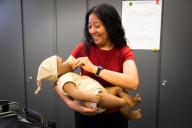


Aims Community College launched an English Language Learning (ELL) and Early Childhood Education (ECE) collaboration designed to provide a career pathway for students whose primary language is not English.

Main Content Area
Aims Community College launched an English Language Learning (ELL) and Early Childhood Education (ECE) collaboration designed to provide a career pathway for students whose primary language is not English.
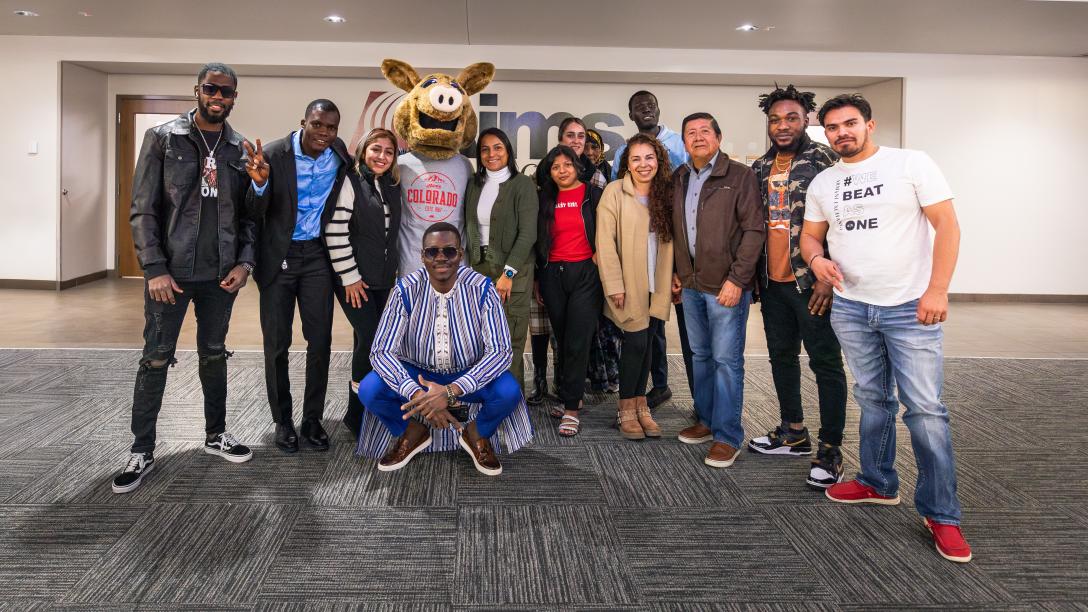
This initiative connects ELL coursework with entry-level ECE classes. Leaders from both departments are working together to build this program: Amber Pleasant, Program Director of Adult Education and ELL, and Laura Killen-Wing, Instructor and Early Childhood Education Chair.
“Our partnership helps students whose first language isn’t English build the skills they need to move forward and pursue a career as an early childhood educator,” Killen-Wing said. “We encourage them to enroll in the language acquisition courses and when they’re comfortable, then they can come enroll in our Intro to Early Childhood Education class.”
“It’s very much a student-driven choice, and we are ready and responsive for whatever they say they need,” Pleasant said. “Whether it’s taking one short semester of English or an entire year of English, we want to make sure that we are managing those expectations for students and set them on that path for career development.”
As students transition, they have access to a free, targeted language lab staffed by professionals on both the ELL and ECE teams. The lab focuses on course-specific language to help students better participate in class discussions and assessments.
Aims selected Early Childhood Education as the pilot program because the field benefits from bilingual professionals and can offer an achievable credential. “Students who choose the early childhood profession with English language support can earn a certificate and graduate in as little as two classes,” Killen-Wing said.
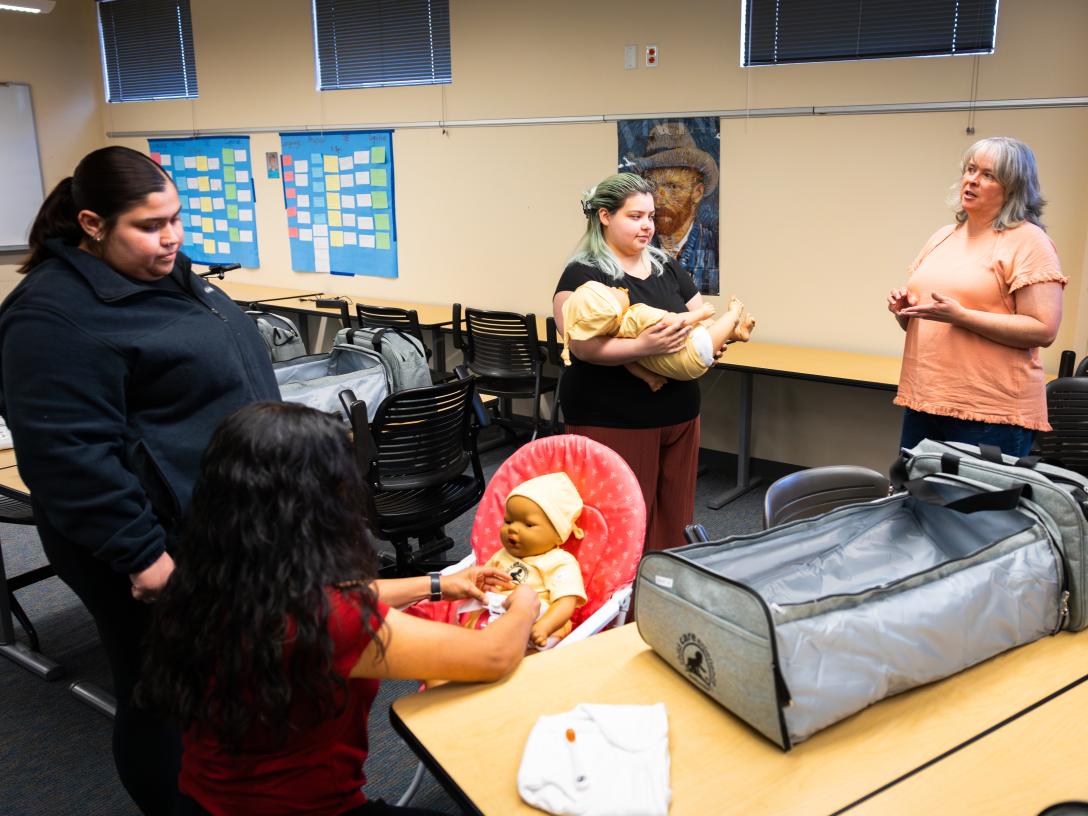
She added that bilingual skills can help early childhood educators communicate with children and families, especially in programs such as Head Start and the Colorado Early Education Network. “The parents that the teachers need to communicate with, their skills are not always advanced,” she said. “I teach my students never to have the children be the interpreter; it's so beneficial when the teachers have those skills.”
Pleasant said the pilot reflects Aims’ focus on equity and inclusion by supporting students’ professional growth while valuing multilingual identity. “None of this is saying you have to leave behind your culture and your language,” she said. “Those are valuable, now we’re going to teach you how to leverage those, and give you new skills. We are bringing forward some of the most valuable employees in the community because they will be bilingual and specifically trained.”
Program leaders hope the pilot becomes a model that can expand into additional career and technical education areas over time. “This is just a taste of what the future could look like at Aims,” Pleasant said. Although some ELL students eventually enroll in classes to earn certificates or associate degrees, this level of support may encourage more students to follow that path, making them more marketable in the workforce.
“If we can start a trend and let it bleed out to other departments to show how it empowers students,” Killen-Wing said, “that would be exciting.”
Pleasant said the long-term goal is to connect ELL enrollment to education and employment outcomes. “My vision is to show the complete, inspiring arc from enrollment in education programs to employment as a bilingual professional or a multilingual professional,” she said. Pleasant’s team is already working with the Commercial Driver License program to help non-native English speakers obtain their CDL.
Aims leaders emphasized that the pilot is being carefully grown to ensure students receive consistent, reliable support. “It’s important to do this right, so we’re comfortable with going slow,” Pleasant said. “We need the right instructors and also make sure that what we say we’re going to do is what we can deliver, because it’s so important to develop and maintain trust in the community.”
To learn more about English Language Learning at Aims, visit aims.co/ell. You can find information about the Aims Early Childhood Education program at aims.co/early-childhood.