


Two recent initiatives are removing barriers for those interested in earning Commercial Driver’s License (CDL) certifications at Aims Community College.

Main Content Area
Two recent initiatives are removing barriers for those interested in earning Commercial Driver’s License (CDL) certifications at Aims Community College.
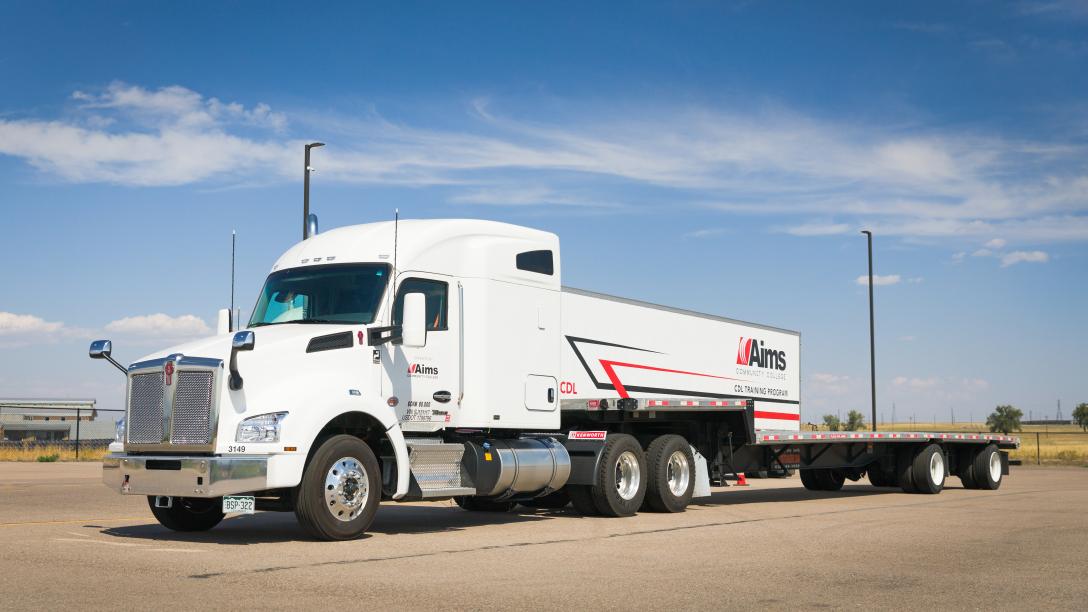
A recently awarded federal grant is helping cover the cost of training, and a new language learning program is supporting non-native English speakers to obtain their certifications.
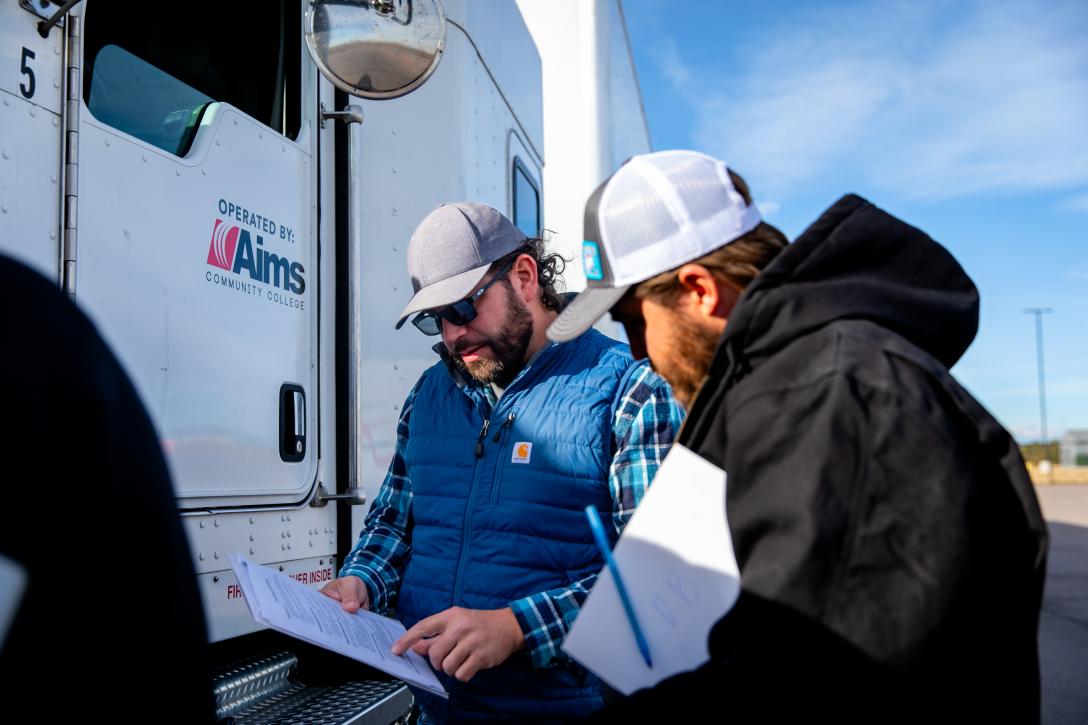
Aims received $137,560 in funding from the U.S. Department of Transportation’s Federal Motor Carrier Safety Administration (FMCSA) through a Commercial Motor Vehicle Operational Safety (CMVOST) grant. This funding will help improve driver safety and create career opportunities in local communities. Another goal of the grant is to strengthen our nation’s trucking workforce and enhance the resiliency of the national supply chain.
At Aims, the money will provide training and certification for 38 individuals to obtain a Class A Commercial Driver’s License. “The funds will be used to cover the tuition and fees for the CDL Program,” said CDL Program Director Martin Rubalcaba. It will specifically benefit military veterans and their families, individuals from underserved communities, and those who are refugees or seeking asylum.
Another program that Aims initiated to bring more inclusivity within the transportation industry is a collaboration between the English Language Learning (ELL) and CDL Program. This program supports non-native English speakers in obtaining their CDL, expanding career opportunities, and addressing the demand for qualified commercial drivers. By incorporating tailored language instruction and culturally relevant training materials, the program seeks to bridge language barriers that often hinder English language learners from succeeding in the licensing process.
The first cohort of students participated in an English for Specific Purposes (ESP) lab designed to support CDL students who can benefit from additional language support. The program includes a 16-week English development course during the fall and spring semesters, and a six-week specialized driver training program running concurrently. Students study general and work-specific English language curricula three days a week and complete their CDL modules on the weekend.
“In many ELL programs, adult learners aspire not only to become proficient in English but also to thrive in their chosen vocations and communities, said Adult Education & ELL Program Director Amber Pleasant. “Recognizing this aspiration, integrating specialized skills training within ELL frameworks becomes not just beneficial but imperative.”
The first CDL students supported by the ELL Program finished their coursework in August. All six participants in the cohort passed their CDL exam and tested at levels on par with traditional students in the program.

The Aims CDL Program is in high demand due to its location in Weld County and its affordability, as it is one of the lowest-cost options in Colorado. Depending on the student, the course takes about three to four weeks. A new cohort usually starts at the beginning of each month and finishes by the end of the month. Aims also offers month-long weekend courses for working individuals.
“By continuing to offer a competitively priced program for our industry and region, we aim to alleviate the financial burden on these students and inspire them to pursue rewarding careers in a high-demand field that offers a sustainable, livable wage,” Rubalcaba said.
“The resources at the Fort Lupton Campus to train future truck drivers are amazing,” said Heidi Windell, the Aims Board of Trustees Treasurer. “It’s great to remove barriers for those seeking a new and well-paying career.”
Aims’ CDL program offers opportunities to obtain a commercial learner permit, Class A and B licenses, and Hazardous Materials Endorsement. More information and an interest form are available at aims.co/cdl.