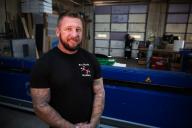

After serving in the U.S. Navy and spending years working in IT, Airam Korionoff was ready for a new direction.

Main Content Area
After serving in the U.S. Navy and spending years working in IT, Airam Korionoff was ready for a new direction.
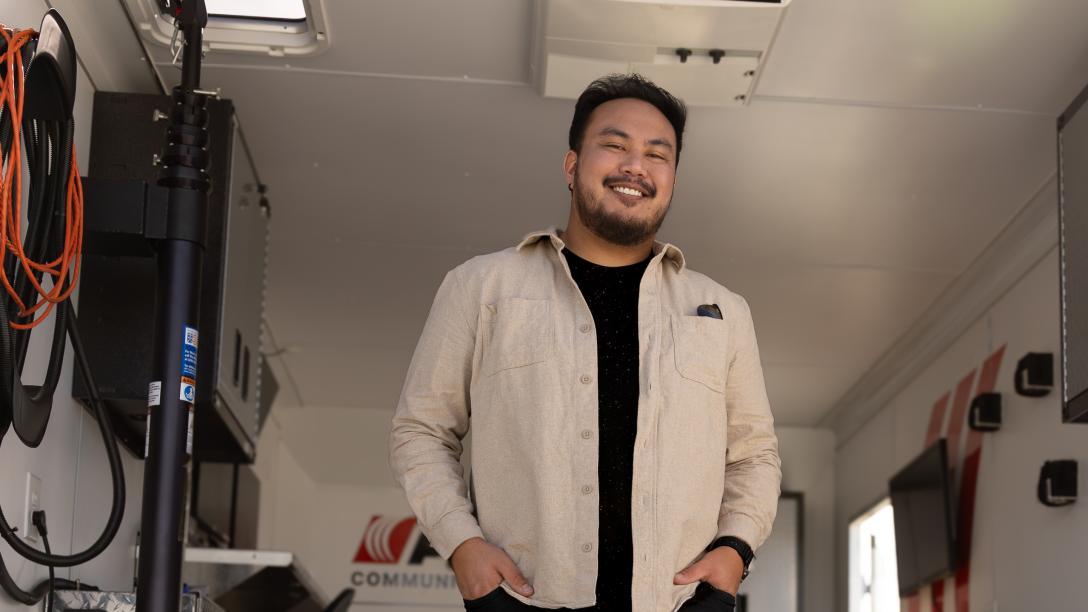
He found it when a friend introduced him to the Unmanned Aerial Systems (UAS) program at Aims Community College. Airam joined the program because it aligned with his interest in creativity and technology.
During his time at Aims, he discovered a love of drones and the vast array of ways that this field can make a positive impact on communities. “I knew I wanted to do something I could be passionate about,” Airam said. “Drones hit that mark for me.”
Airam is fully immersed in the hands-on learning environment that defines the UAS program both inside and outside of the classroom. The Aims UAS Operations (Ops) Team is an elite group of students who support contracted drone work. Being selected for the UAS Ops Team is one of Airam's proudest accomplishments at Aims. He spends more time each week working with the Ops Team than he does in his classes, gaining hands-on experience that mirrors industry expectations.
“We do everything from design and fabrication to flying commercial jobs. It’s all part of it.”
Airam’s work with the Ops Team spans the full lifecycle of drone development. He and his teammates are involved in designing and building aircraft from the ground up, including learning how to create carbon fiber molds, assemble avionics and fabricate airframes entirely in-house. “It’s all hands-on. You’re not just reading about it,” he said. “You’re doing it.”The team regularly works with tools in UAS labs on the Windsor Campus, including CNC machines, laser cutters and 3D printers.
Beyond fabrication, the Ops Team is also helping shape the future of the UAS program itself. Current projects include developing long-range drones with vertical takeoff and landing (VTOL) and forward-flight capabilities. This work supports future grant opportunities and may lead to higher-level UAS courses at Aims. “It feels like we’re building the foundation for what future students will learn,” Airam said.
In addition to technical development, the Ops Team handles commercial drone projects contracted through Aims. Airam has worked on promotional shoots for organizations, including filming regional Toyota commercials, businesses such as FlyteCo Tower in Denver, and community events like the Windsor Turkey Trot. These projects give students experience with professional flight operations, client expectations and production timelines. These are all skills that translate directly into the workforce.
“Every job is different,” Airam said. “You’re not just flying. You’re thinking about safety, shot planning, communication, and how to deliver what the client needs.”
Last year, he had another chance to show his talents in a high-pressure, real-world setting, as being the first Aims UAS students to participate in SkillsUSA, a worldwide workforce development event. Airam and three other students competed in Colorado SkillsUSA Commercial UAS team events. The Aims team brought home both gold and silver medals at state and his peers brought home the national championship. Airam also served as a SkillsUSA judge for the high school division drone competition. He feels that it was a unique leadership experience and he is excited to see how it evolves. “We’re kind of helping define what UAS looks like in SkillsUSA,” he said.
Airam’s interests span both the artistic and technical sides of drone work. His experience at Aims has shown him that UAS is not limited to one career track. Students can explore industries ranging from emergency response to agriculture. “It feels like endless doors have opened,” he said.
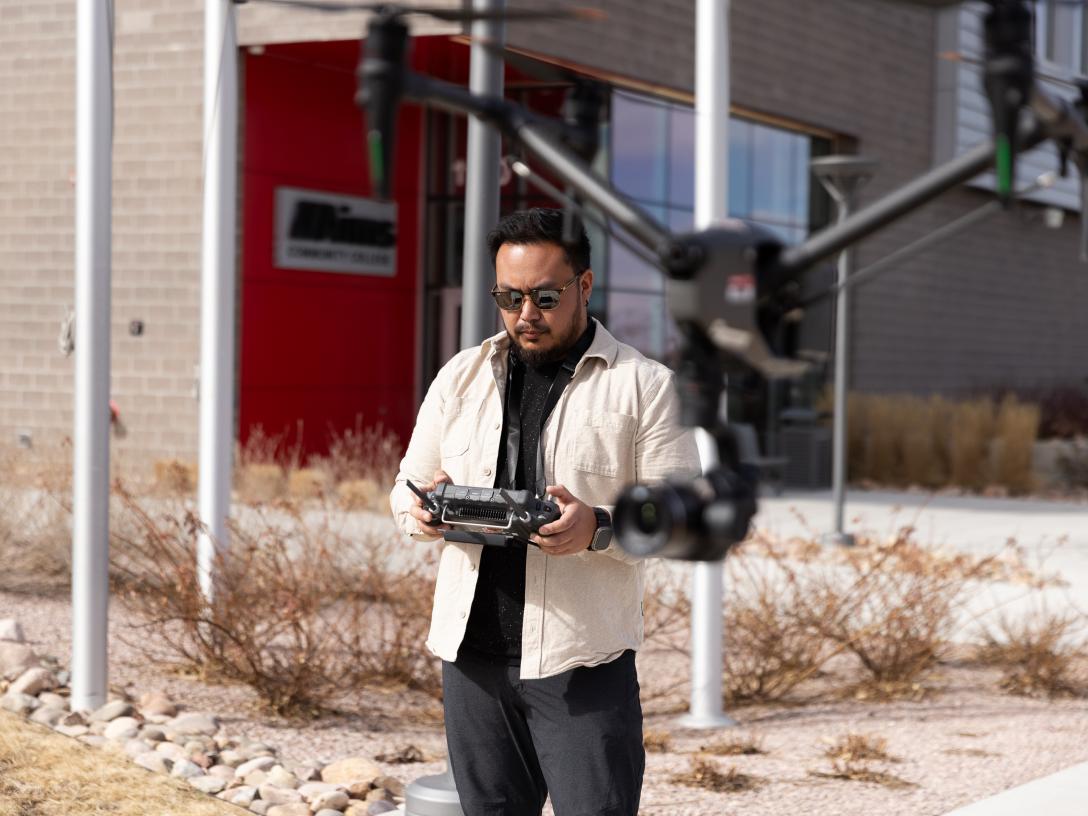
For Airam, the creative side has been fascinating. As a photographer and videographer, he sees drones as powerful creative tools, opening new perspectives and alternative ways to capture the world. “I’ve always loved photography,” Airam said. “Being able to do it from the sky is awesome.”
He believes that aerial camerawork offers a unique way to tell stories. “The art and cinematography side of it has been fascinating to me,” he said. “The ability to capture something meaningful from above is amazing.”
Storytelling from the sky is only part of what makes drone technology so compelling for him. Beyond capturing striking visuals, Airam is equally drawn to how drones can serve communities.
Airam is exploring how first responders can locate missing individuals, assess hazardous conditions, and provide critical support during emergencies, without putting additional responders at risk. The idea that drones can support first responders is one of the most exciting possibilities in the field. Inspired by a trip to Iceland, where he met search-and-rescue crews using drones. “People hear ‘drone’ and think of the military,” he said. “I’ve mostly been fascinated with how much we can save lives and help people in disaster scenarios.”
In one of his current hands-on projects, Airam is helping design a fixed-wing drone capable of demonstrating firefighting support, including the ability to deploy fire retardant. He and his classmates have been experimenting with new release mechanisms and studying how full-scale firefighting aircraft operate. It’s an innovative intersection of engineering and public safety. Airam calls it “a really cool project.”
Balancing school, work, and life hasn’t been easy. Airam transitioned from full-time employment to part-time to make space for his education. With his wife also working full-time and dealing with significant medical challenges, the journey has required resilience and sacrifice. The support he’s found at Aims has made all the difference.
“Instructors like Gayle Kakac and Jake Marshall have really mentored me,” Airam said. “They encourage us to explore, to try new things, even if we fail. It’s a learning culture.”
He credits Kakac’s career shift from film to drones as a reminder that there’s no deadline on finding your purpose. “It’s been inspiring to know I don’t have to shut any of these doors,” he said.
Marshall is incredibly proud of Airam and all he’s accomplished at Aims. “He is an unbelievable human being—smart, dedicated and driven to learn. He has maximized his time in the UAS program, stepping into leadership through outreach and contractual operations.”
Since receiving support and mentorship, Airam is eager to guide others. He’s already recommended the program to others and believes Aims is the place to be for students curious about drones, aviation, or building something meaningful with their hands. “Jump in and do it.”
As Airam works toward completing the UAS program in fall 2026, he is still exploring the many directions his future could take. Rather than feeling limited to one career track, he sees the field of unmanned aerial systems as full of opportunity.
“I haven’t really decided exactly what I want to go into as a full career after,” Airam said.
“It has just felt like endless doors have opened.”