


As hospitals across Colorado and the nation celebrate National Hospital Week, May 10-16, Aims Community College spotlights educational pathways that help prepare the next generation of hospital workers.

Main Content Area
As hospitals across Colorado and the nation celebrate National Hospital Week, May 10-16, Aims Community College spotlights educational pathways that help prepare the next generation of hospital workers.
One of those routes is the Aims Acute Care Nurse Aide Certificate, a fast-track program designed for certified nursing assistants (CNAs) who want to build advanced healthcare skills and transition into hospital and acute care settings. Acute care focuses on short-term medical conditions for patients experiencing severe, sudden, or urgent health conditions, injuries, or recovery from surgery.
Current CNAs and soon-to-be CNA graduates interested in working in hospitals and acute care environments are encouraged to apply for the Aims Acute Care Nurse Aide Certificate. Interested students should RSVP for an upcoming orientation session on May 27.
In 2024, the Acute Care Certificate was launched in collaboration with industry-focused Aims advisory boards. Partners like Banner Health and UCHealth were requesting CNAs with additional skills to support patient care. “Our hospital partners have been really positive about our students,” said Heather Brown, Aims professor for the Acute Care Nurse Aide program. “This certificate shows employers that students are ready.” The overall goal is to bridge the gap between basic CNA training and the demands of hospitals.
The five-week certificate program combines online coursework with twice-weekly in-person lab sessions. Students practice what they’ve learned in a 30-hour clinical experience at a local hospital. Students have an opportunity to work alongside experienced hospital CNAs to gain skills and confidence in acute care settings.
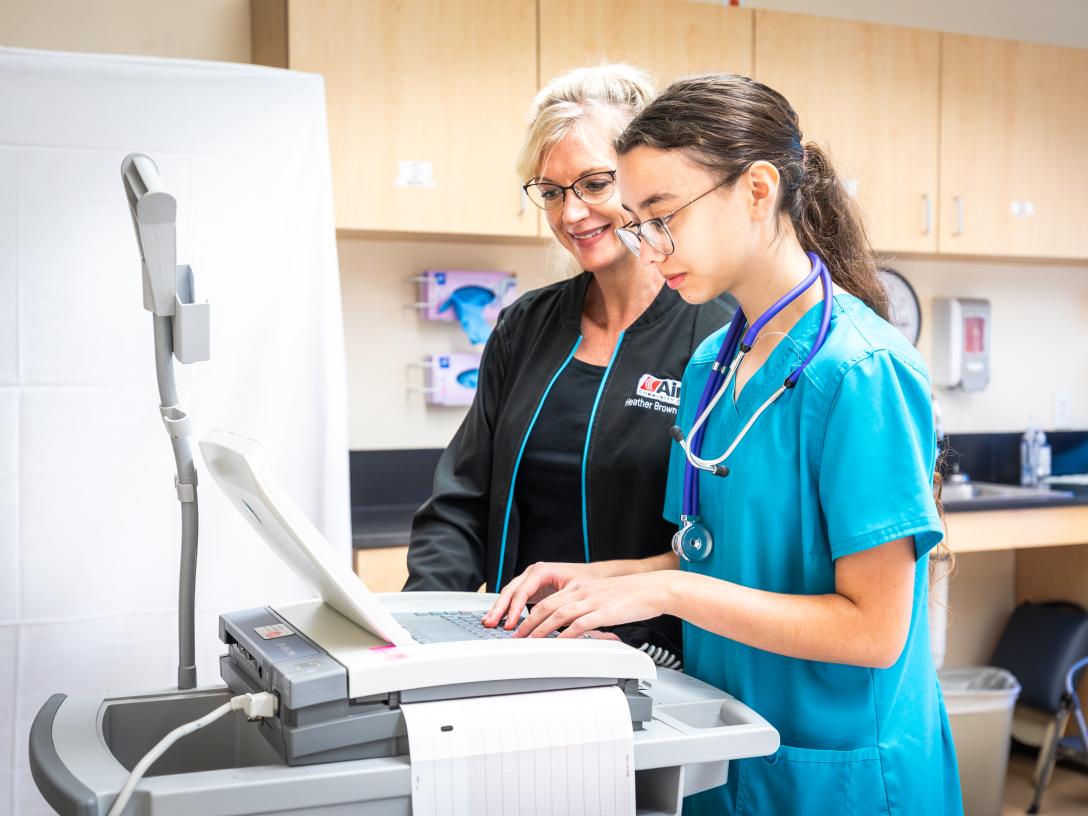
“Some of the students who complete a CNA know some very basic skills to be able to take care of patients, especially in long-term care, but they’re not quite prepared for the rapid changes in a patient’s status that can happen in an acute care environment,” Brown said.
Unlike traditional CNA programs that focus heavily on long-term care settings, the Acute Care program provides students with hands-on experience in hospital-based patient care, critical-thinking scenarios and advanced clinical skills.
Students learn to:
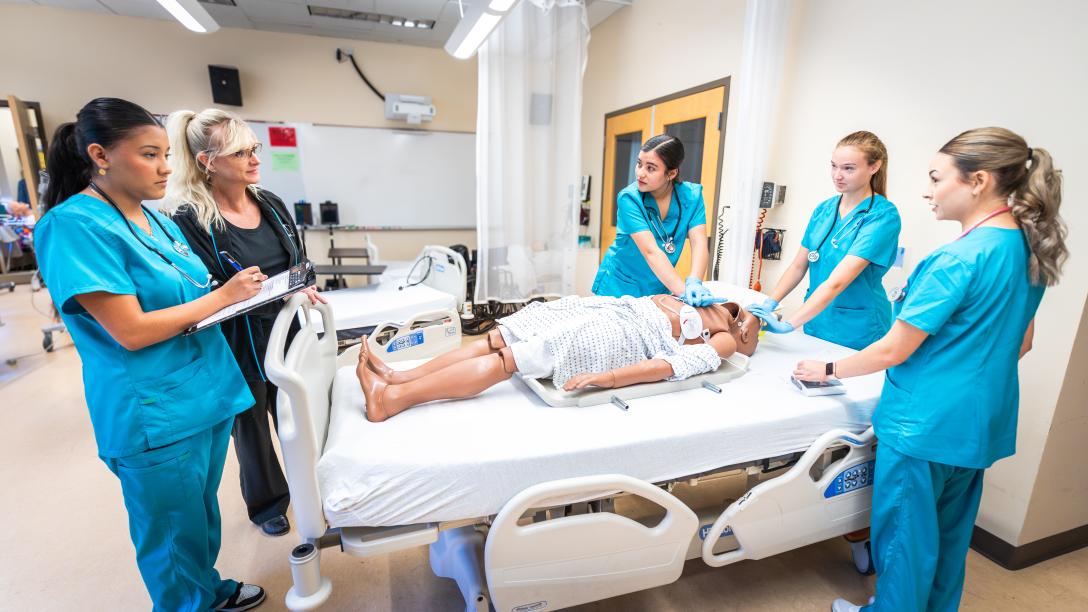
The program also gives students access to advanced simulation technology, including a high-fidelity mannequin capable of breathing, blinking, bleeding and displaying changing vital signs and cardiac rhythms. These simulations allow students to safely practice responding to real-life emergencies before entering a hospital.
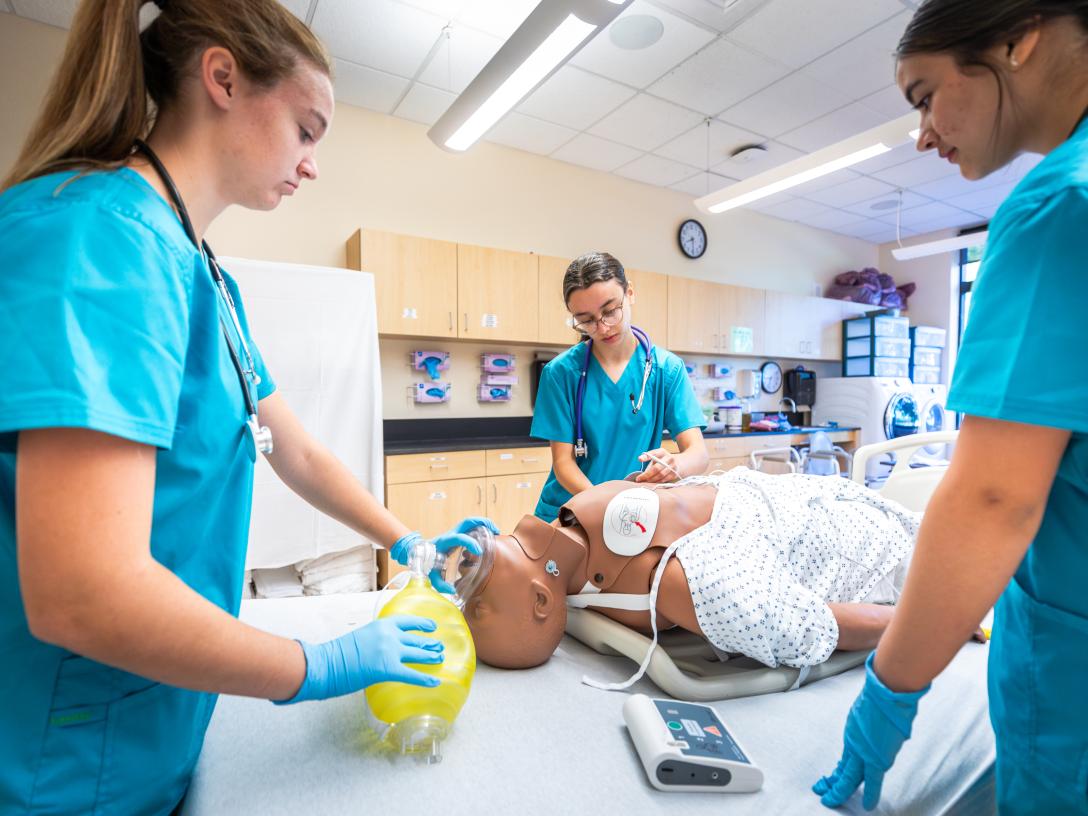
“What I love about having this high-fidelity mannequin who can show rapid changes is that students have the opportunity to fail safely,” Brown said. “Then when they go to clinical and there are real patients, they’re ready.”
The Acute Care Nurse Aide Certificate is a stackable credential that allows students to continue building skills and advancing their careers. “A lot of students are working toward their RN, rad tech, surg tech or pre-med pathways,” Brown said. “This class is helping them bridge from a long-term care environment to that acute care environment and being able to see the things that someday they want to do as a nurse or physician.”
Students are finding the program engaging and worthwhile. “It was amazing,” said Zoulaehath Nouatin, a student in the Acute Care program. “I’ve learned so much. During clinicals, I worked with good CNAs who were helpful and willing to show me everything they knew. I had so much fun and it was a great experience.” During the three-day weekend clinical, Nouatin felt she was ready to work on her own by Sunday.
As hospitals continue to face workforce shortages, programs like the Aims Acute Care Nurse Aide Certificate get more people ready for fast-paced healthcare environments.
If you’re a Colorado-certified nurse aide seeking new career challenges, the Acute Care Nurse Aide Certificate at Aims is the perfect way to advance your skills. Learn more about the program requirements and the May 27 orientation session to get started.